Your Cart is Empty

FREE UK DELIVERY for all Vikan Orders over £150 GBP. MOQ £70.
FREE UK DELIVERY for all Vikan Orders over £150 GBP. MOQ £70.
This section doesn’t currently include any content. Add content to this section using the sidebar.
SOS Hygiene supplies a comprehensive range of professional detergent chemicals for the food and beverage industry, designed to help food manufacturers, processors and food service businesses effectively remove food residues, grease, fats, proteins, scale and other soils from production equipment, surfaces and processing systems.
Effective cleaning is one of the foundations of food safety. In a food factory, simply making a surface look clean is not enough. Food-contact surfaces, processing equipment and production environments need to be managed to control physical, chemical, microbiological and allergen contamination.
SOS Hygiene supplies a comprehensive range of professional food and beverage detergents designed for demanding cleaning applications across food processing and manufacturing environments.
From general-purpose foam cleaning to heavy-duty caustic cleaning, acid descaling and Clean-in-Place (CIP) applications, the SOS Hygiene range provides cleaning solutions for different types of food soil, equipment and production requirements.
A robust cleaning programme should form part of a food business's overall food safety management system.
HACCP-based systems identify hazards and establish controls at appropriate points in the production process. Cleaning procedures should therefore be developed around the specific hazards, equipment, products and soils found within the individual factory.
A suitable cleaning procedure should establish, as applicable:
The cleaning method should be validated or otherwise verified as appropriate for the particular application rather than
assuming that one detergent or procedure is suitable for every part of a factory.
Cleaning and disinfection are not the same process.
Detergents are primarily used to loosen, emulsify and remove food soils and other contamination from surfaces. Effective
cleaning can also remove some microorganisms, but it should not automatically be considered a substitute for an appropriate disinfection or sanitisation step.
SOS Hygiene explains that detergents, combined with physical and thermal energy, remove dirt and may remove some
microorganisms, while a more lethal treatment may be required to control remaining microorganisms.
A typical food-factory hygiene sequence may therefore involve:
Debris removal → Pre-rinse → Detergent cleaning → Rinse → Inspection/verification → Disinfection/sanitisation → Final
rinse where required → Pre-production inspection
The exact procedure should always be established according to product, equipment, food safety plan and chemical manufacturer's instructions..
An effective cleaning process does not rely on detergent chemistry alone.
SOS Hygiene describes cleaning as a combination of energy sources including:
The detergent chemistry needs to be appropriate for the type of soil being removed.
Agitation, turbulence, brushing or other mechanical action can help detach contamination.
Temperature can influence cleaning performance and the behaviour of both soils and cleaning chemicals.
The detergent needs sufficient contact with the contamination to perform effectively.
These factors work together. Changing one may affect the requirements for the others.
Foam cleaning is widely used in food and beverage production because it can provide visible coverage of suitable surfaces and help maintain detergent contact with contamination.
Depending on the product, foam detergents can be used for:
Foam should be applied using suitable equipment and at the manufacturer's specified concentration, temperature and contact time.
For example, several SOS Hygiene foam detergents specify 3–5% v/v through suitable foam-generating equipment at ambient temperature, although the correct requirements vary by product.
Always consult the relevant Product Data Sheet.
An important principle of food hygiene is that visual cleanliness alone is not always sufficient evidence of effective cleaning.
Depending on the site's HACCP plan and risk assessment, verification can include:
SOS Hygiene supplies alkalinity testing products for monitoring certain detergent applications, including its caustic foam detergents.
The appropriate verification method should be determined according to the site's food safety risk assessment and cleaning
validation requirements.
Food safety is only one part of chemical management. Cleaning chemicals can also present occupational health hazards to employees.
UK HSE guidance highlights that some cleaning products can cause skin irritation, allergies, asthma, burns or eye damage.
Appropriate controls may include safe working practices, storage, PPE, ventilation, training and suitable risk assessments.
For food and drink businesses chemical-control procedures should consider:
The HSE states that COSHH assessments should
consider the chemicals used, their hazards, control measures, safe storage, compatibility, working concentrations, dilution and application procedures, together with training and emergency arrangements.
A food factory must manage the risk of cleaning chemicals becoming a source of food contamination.
Good practice includes:
Never mix cleaning chemicals unless the manufacturer specifically states that they are compatible.
Food Contact Surfaces
For food-contact equipment, cleaning procedures need to be particularly well controlled.
The objective is to remove food residues, soils and contamination without leaving unacceptable chemical residues or damaging the equipment.
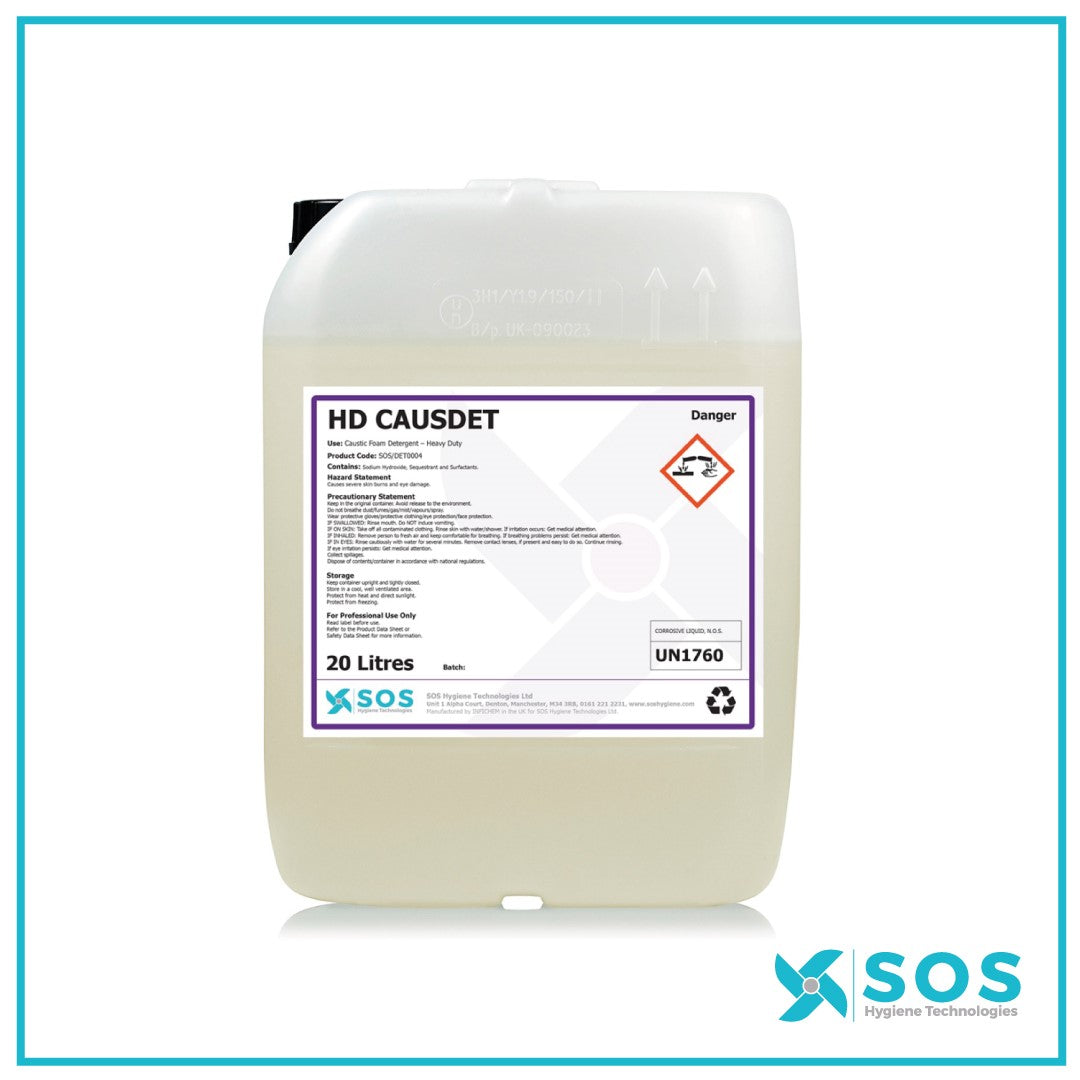
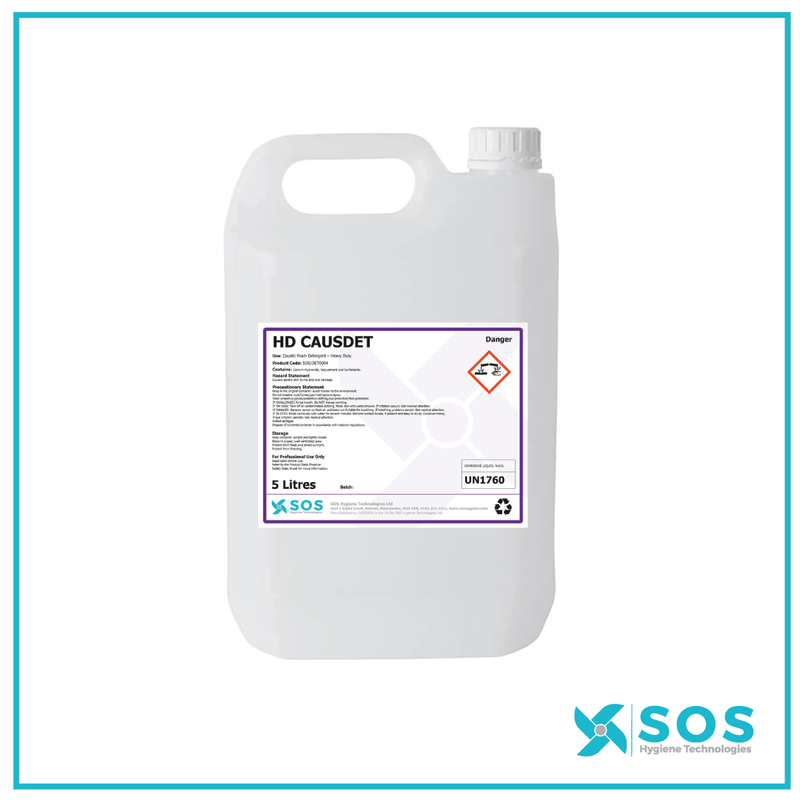
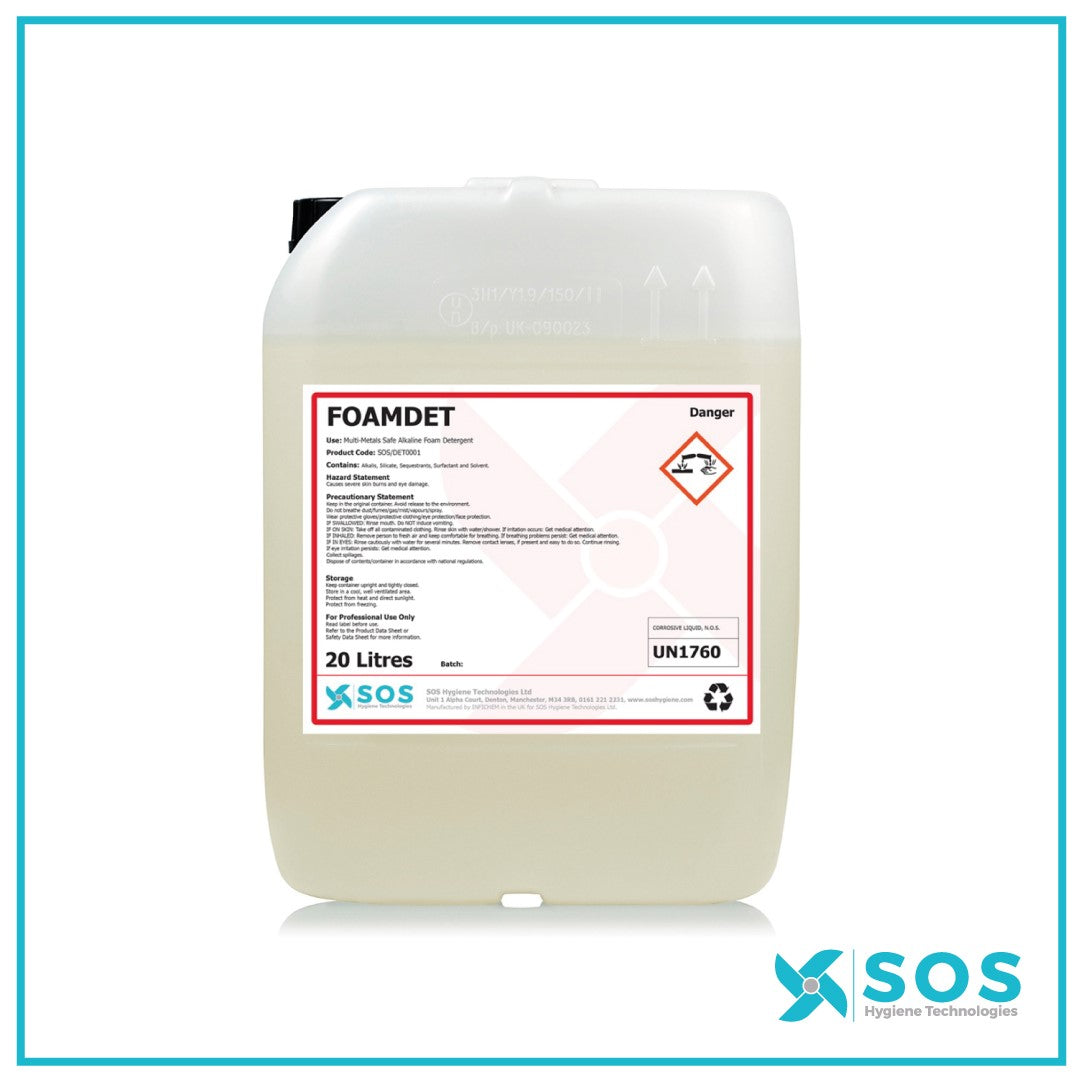
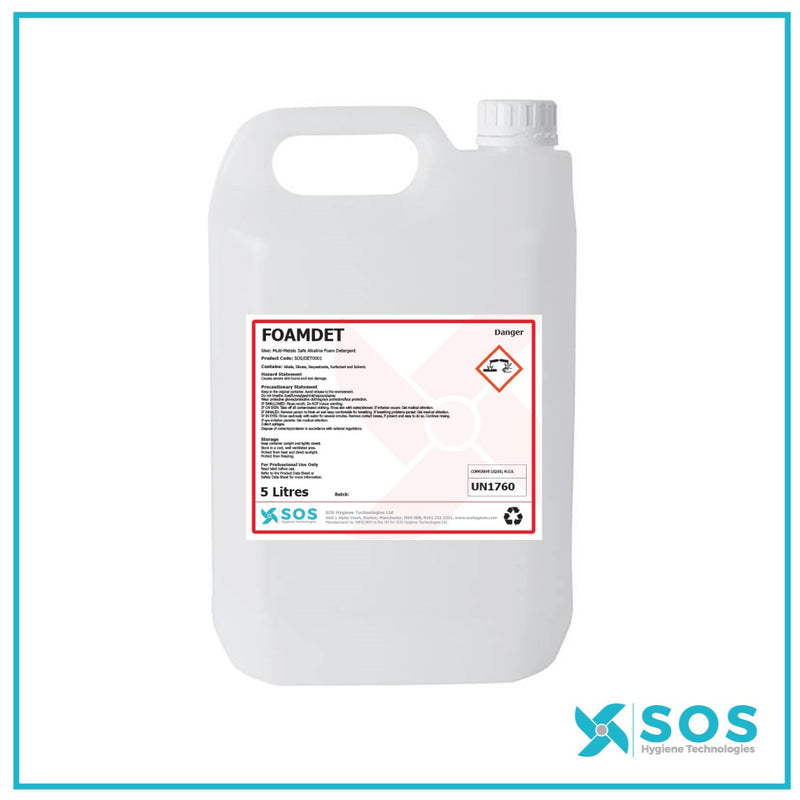
Material compatibility is also important. For example, HD CAUSDET is specifically not suitable for soft metals, whereas FOAMDET is described by SOS Hygiene as multi-metal safe.
Always confirm compatibility before introducing a detergent into a new cleaning application.
SOS Hygiene states that it serves the UK food and beverage industry and has more than 20 years' experience as a cleaning and disinfection chemicals supplier.
A food manufacturing detergent is a professional cleaning chemical designed to remove specific types of contamination and food soils from equipment, surfaces and production environments.
Detergent cleaning helps remove food residues, fats, proteins, grease and other soils that can contribute to microbiological, allergen and other contamination risks. It is a fundamental part of a controlled food hygiene programme.
Cleaning should be considered within the food business's food safety management system and HACCP-based procedures where relevant. The exact controls and monitoring requirements depend on the hazards identified by the individual business.
Detergents primarily remove soils and contamination. Some detergents may have antimicrobial properties or remove microorganisms through the cleaning process, but detergent cleaning should not automatically be treated as disinfection.
Where the food safety procedure requires disinfection, the surface should be cleaned effectively first and then treated with an appropriate disinfectant according to the approved procedure and product instructions.
Alkaline detergents are generally used for many organic food soils such as fats, grease and proteins. Acid detergents are commonly used to tackle mineral deposits, limescale and some inorganic residues.
The exact chemistry should be selected according to the soil and equipment.
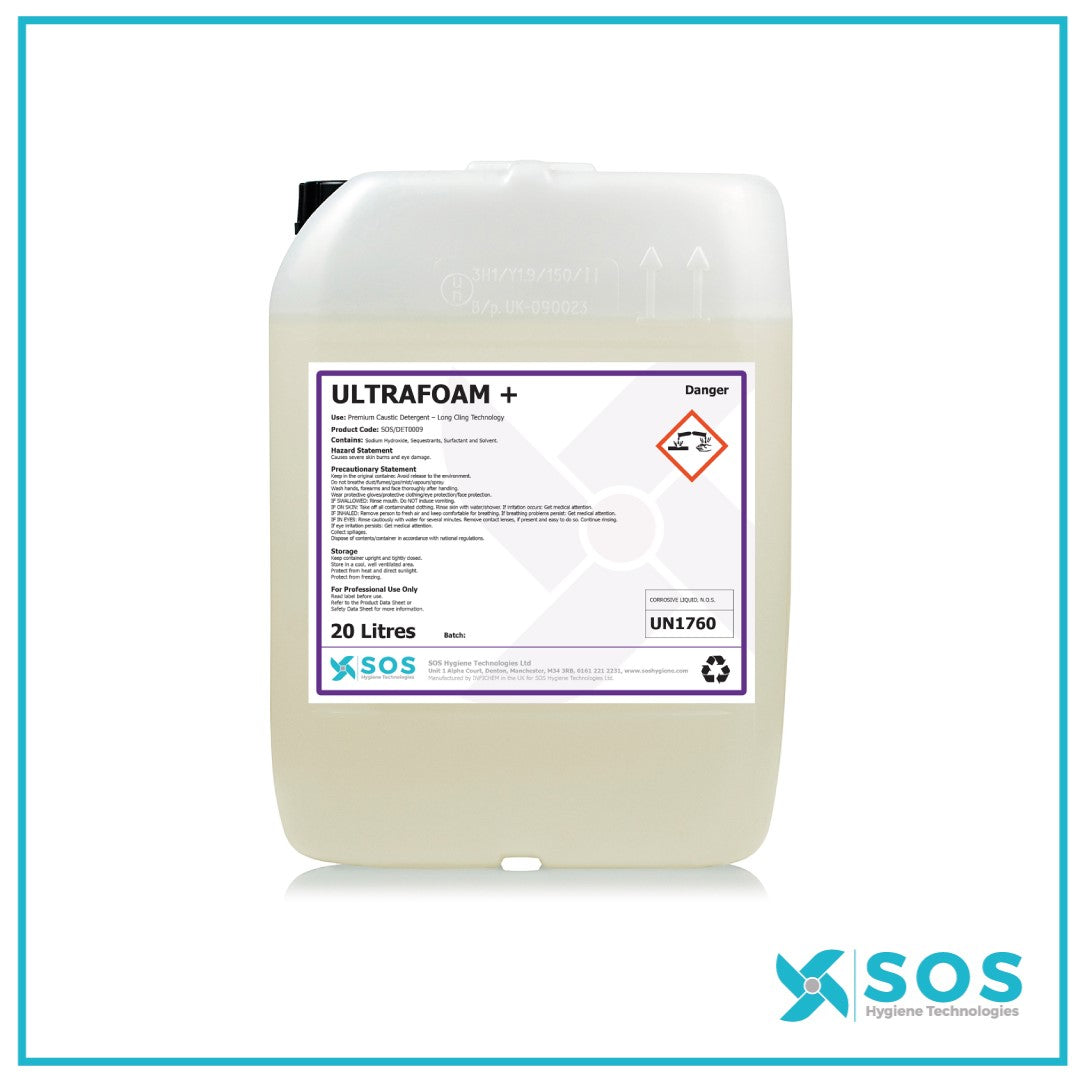
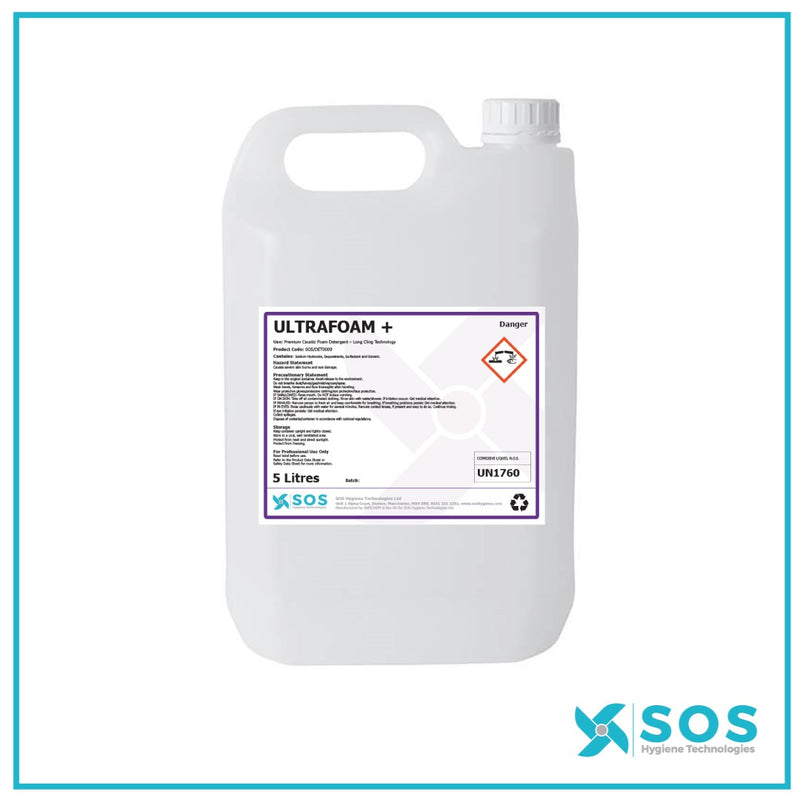
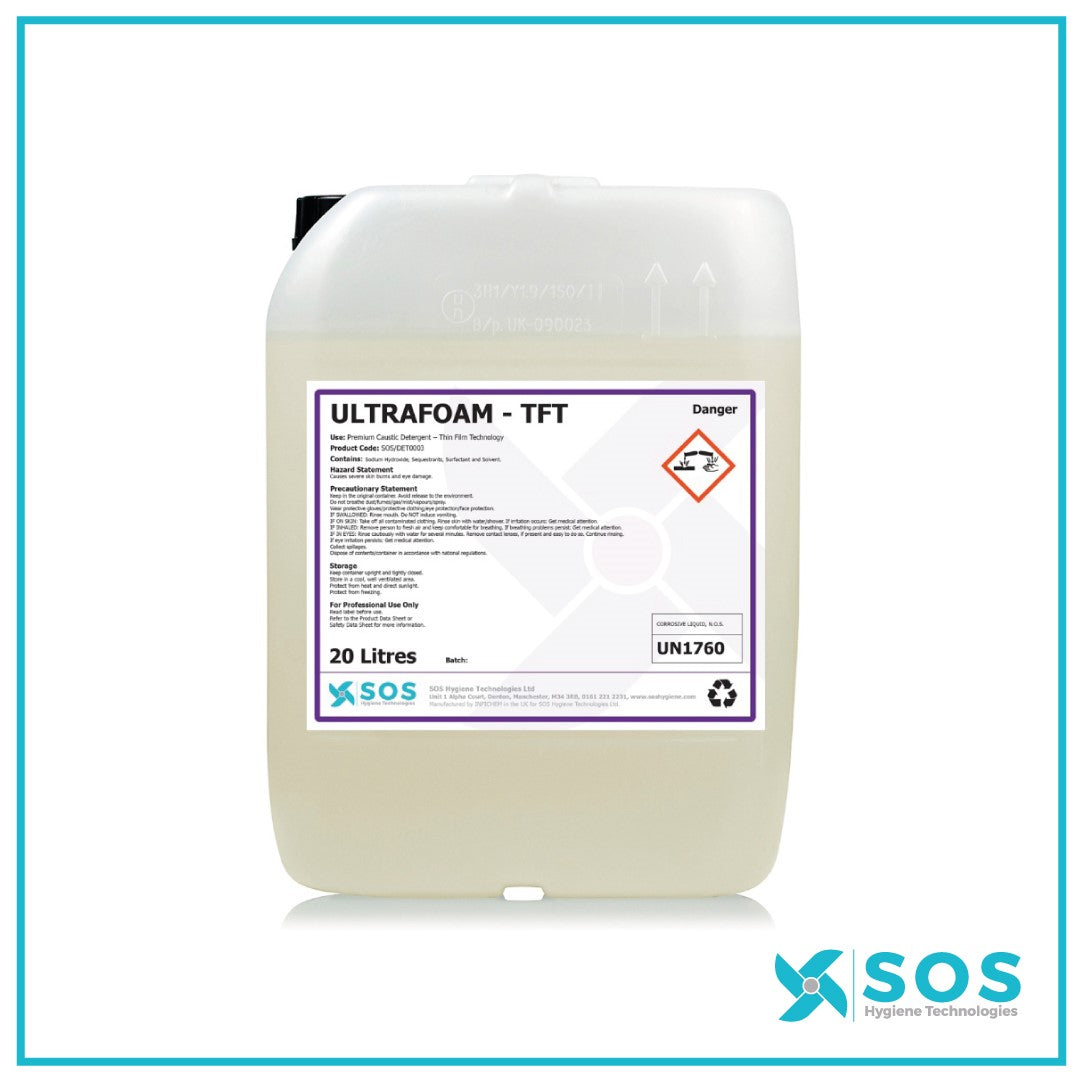
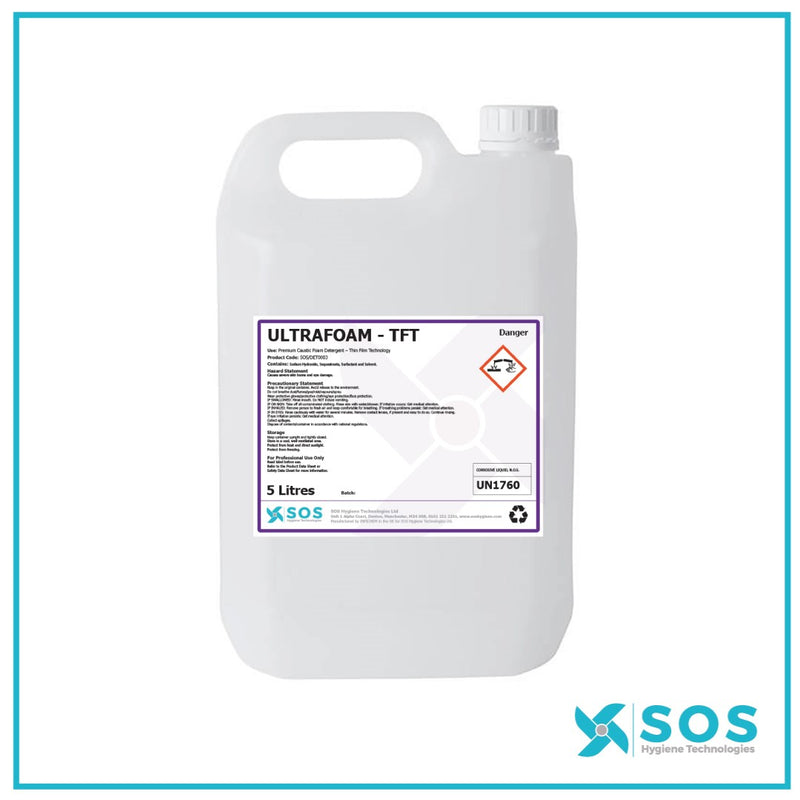
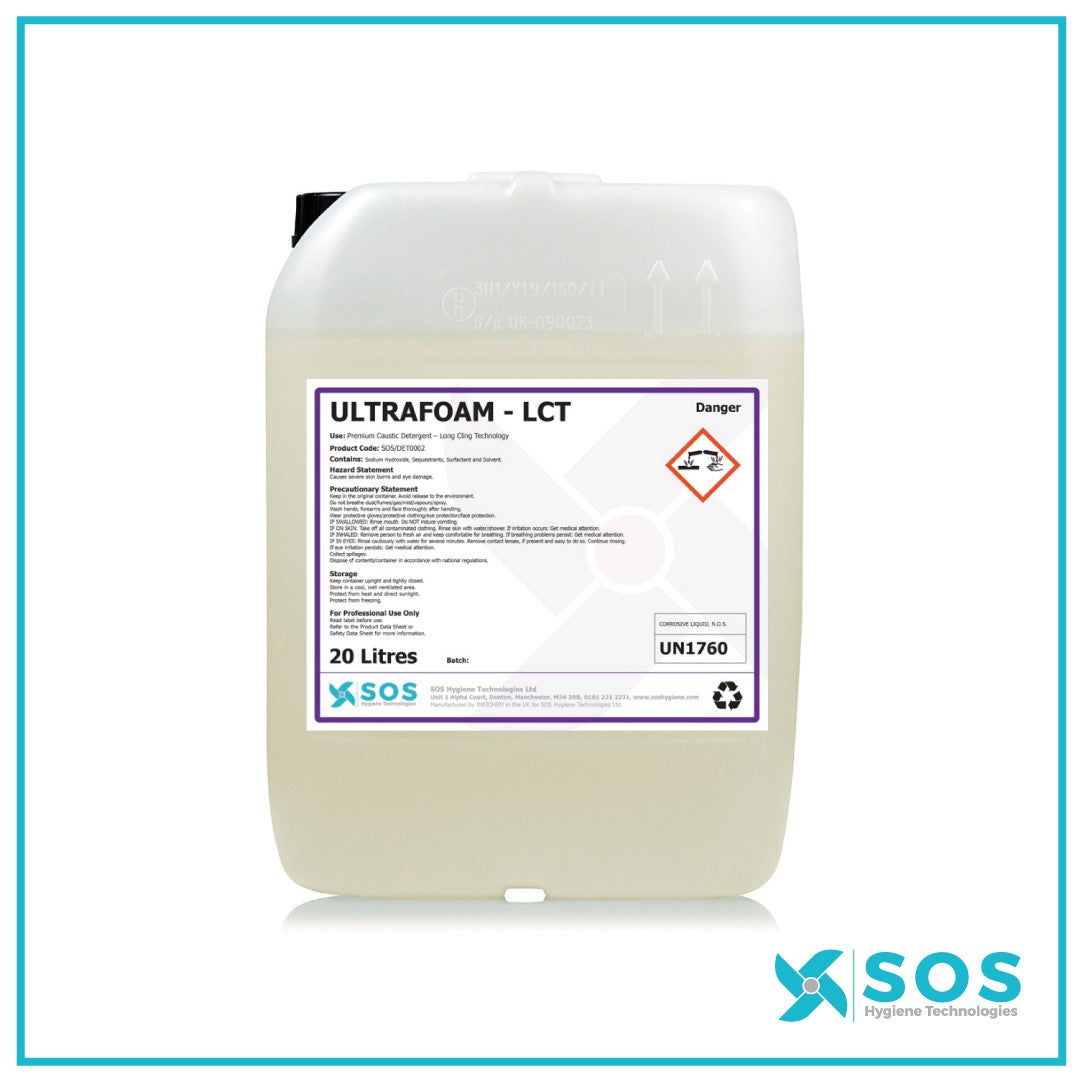
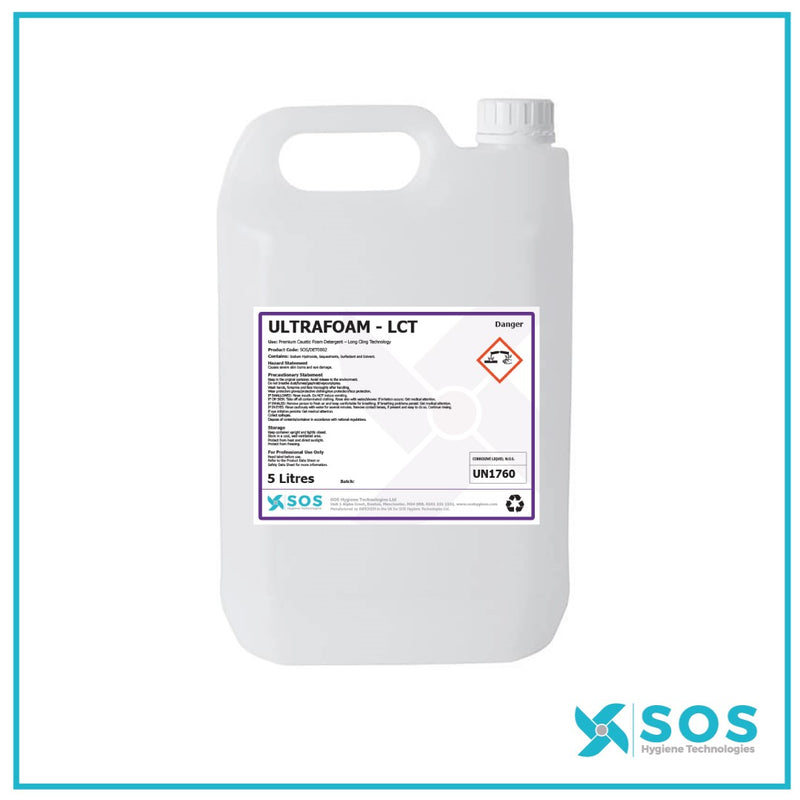
SOS Hygiene offers several alkaline and caustic foam detergents designed for fat and grease removal, including FOAMDET, ULTRAFOAM LCT, ULTRAFOAM TFT, ULTRAFOAM + and HD CAUSDET.
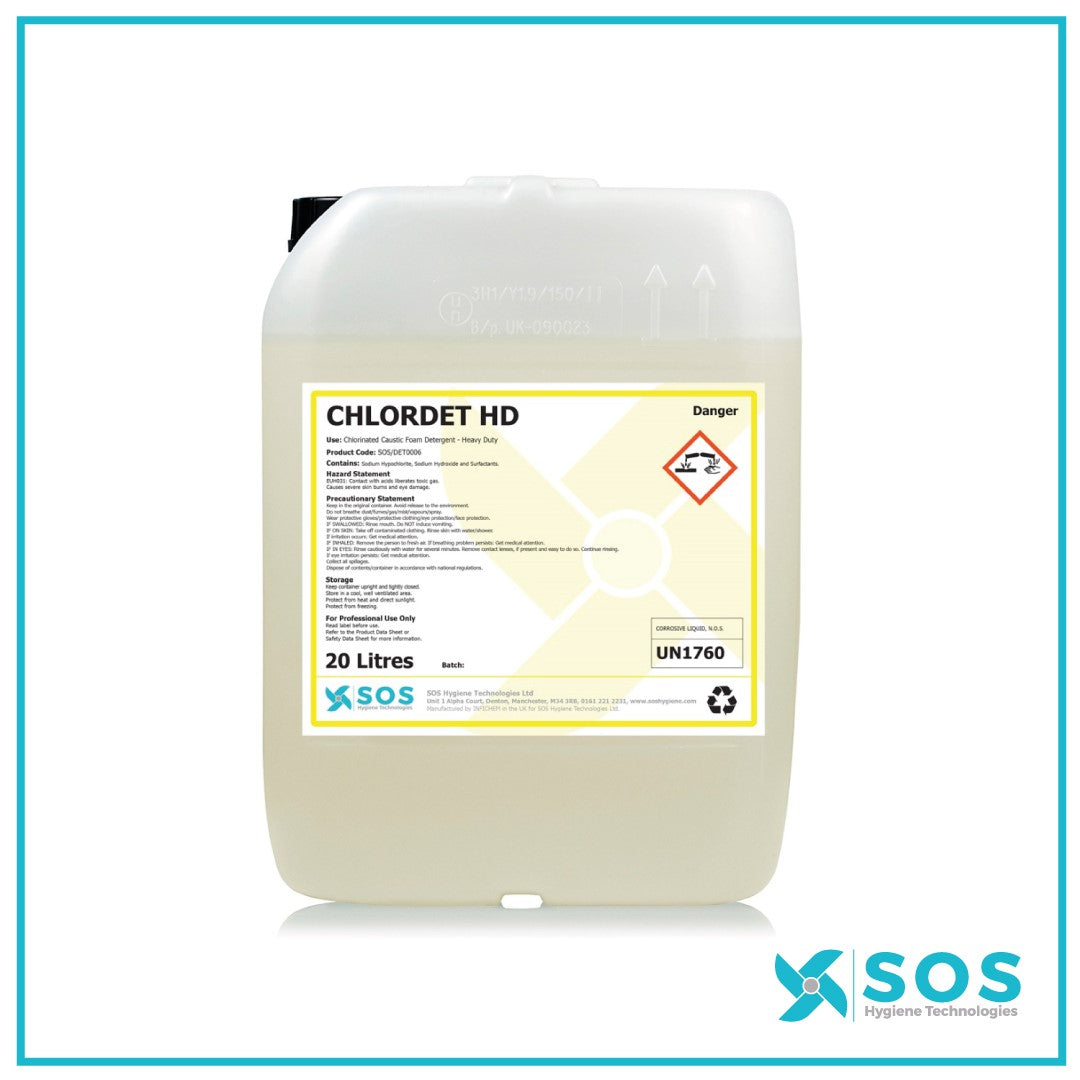
For heavy carbonised food soiling, a heavy-duty caustic detergent may be appropriate. HD CAUSDET is specifically described as being highly effective against heavy carbonised soiling and stubborn cooking deposits.
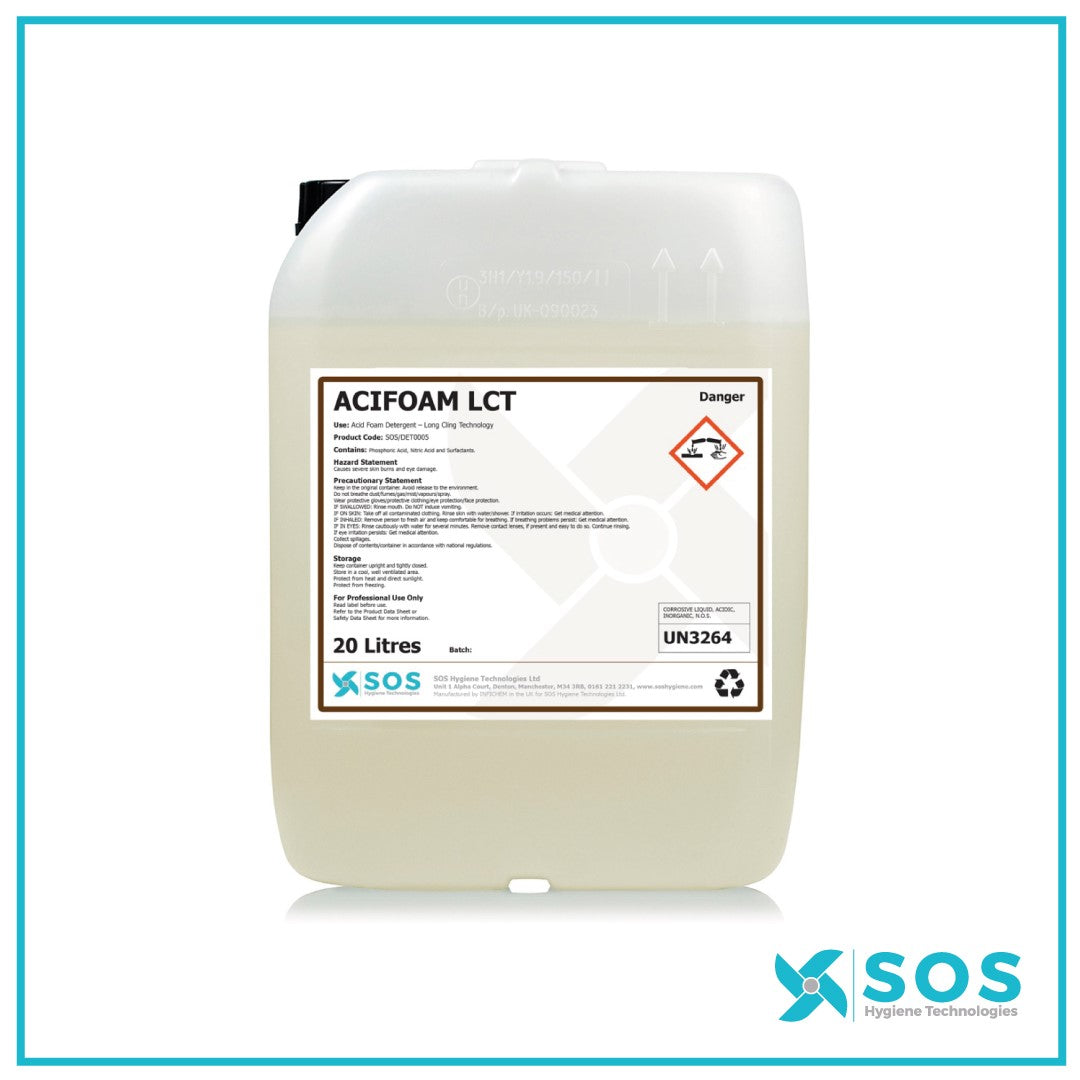
An acid detergent is generally appropriate for mineral scale and limescale. ACIFOAM LCT is designed for descaling and removal of mineral scale and detergent deposits.
Foam detergents create a layer of cleaning solution that can provide visible surface coverage and detergent contact during open-plant cleaning
The detergent needs sufficient time to interact with and loosen the contamination. The required contact time depends on the product, concentration, temperature, soil and application.
There is no universal detergent concentration. Always use the concentration specified in the relevant Product Data Sheet.
Several SOS Hygiene foam detergents specify 3–5% v/v, but this should not be assumed to apply to every product.
Not necessarily. Different areas can have different soils, equipment materials and cleaning requirements. A food factory may need alkaline, caustic, acid, multi-metal-safe and CIP detergents for different applications.
Some cleaning chemicals can attack or damage particular materials. Selecting a compatible detergent helps protect equipment and maintain cleaning performance.
No. Product compatibility varies. For example, HD CAUSDET is not suitable for soft metals, while FOAMDET is described as multi-metal safe. Always check the relevant product documentation.
Where hazardous substances are used at work, COSHH requirements may apply. HSE guidance recommends assessing chemical hazards and controlling exposure through appropriate measures including safe storage, dilution, application procedures, PPE, training and emergency arrangements.
Chemical storage must be properly controlled to prevent contamination, chemical incompatibility and exposure risks. All chemicals in a production area should be stored in a chemical lockable holder, wtith a chemical point of use sign above with all the relevant chemical Health and Safety details on in the event of an emergency. Always follow the relevant Safety Data Sheet, COSHH assessment and site chemical-storage procedure.
Sign up to get the latest on sales, new releases and more …