Your Cart is Empty

FREE UK DELIVERY for all Vikan Orders over £150 GBP. MOQ £70.
FREE UK DELIVERY for all Vikan Orders over £150 GBP. MOQ £70.
This section doesn’t currently include any content. Add content to this section using the sidebar.
SOS Hygiene supplies a comprehensive range of chemical disinfectants for the food and beverage industry, helping food manufacturers, processors and food service businesses develop effective cleaning and disinfection programmes for demanding production environments.
Effective disinfection is a critical part of food safety and environmental hygiene. Food processing environments can contain numerous potential microbial harbourage points, including production equipment, conveyors, floors, drains, processing lines, pipework and difficult-to-access surfaces.
SOS Chemical Disinfectants are selected to support food and beverage businesses with targeted hygiene solutions for different stages of their cleaning programmes.
Our range can help businesses address requirements including:
Terminal disinfection is an important stage of many food manufacturing cleaning programmes. Following effective cleaning and removal of organic matter, a suitable disinfectant can be applied to compatible surfaces and equipment to reduce microbial contamination before production resumes.
SOS offers disinfectant options for suitable applications including:
Depending on the product, application and manufacturer's instructions, disinfectants may be applied by spraying, foaming,
granular spreading or other suitable methods.
The correct product should always be selected according to the surface, application, target organisms, required contact time,
temperature and site's documented hygiene procedures.
Clean in Place (CIP) is widely used throughout the food and beverage industry to clean and disinfect internal surfaces of processing equipment without requiring the plant to be dismantled.
CIP applications can include:
A suitable CIP disinfectant should be selected according to the equipment, materials, process conditions and hygiene requirements.
Our range includes products specifically suited to CIP applications, including two-part acid-based disinfectant systems designed for biofilm and pathogen control.
CIP processes should be carefully controlled, including chemical concentration, temperature, contact time, flow, circulation
and final rinsing, in accordance with the product manufacturer's instructions and equipment requirements.
Open Plant Cleaning (OPC) involves the cleaning and disinfection of accessible production equipment, machinery and surfaces.
Foam-based disinfectants can provide an effective way of applying chemical products across larger or complex areas of
open plant equipment.
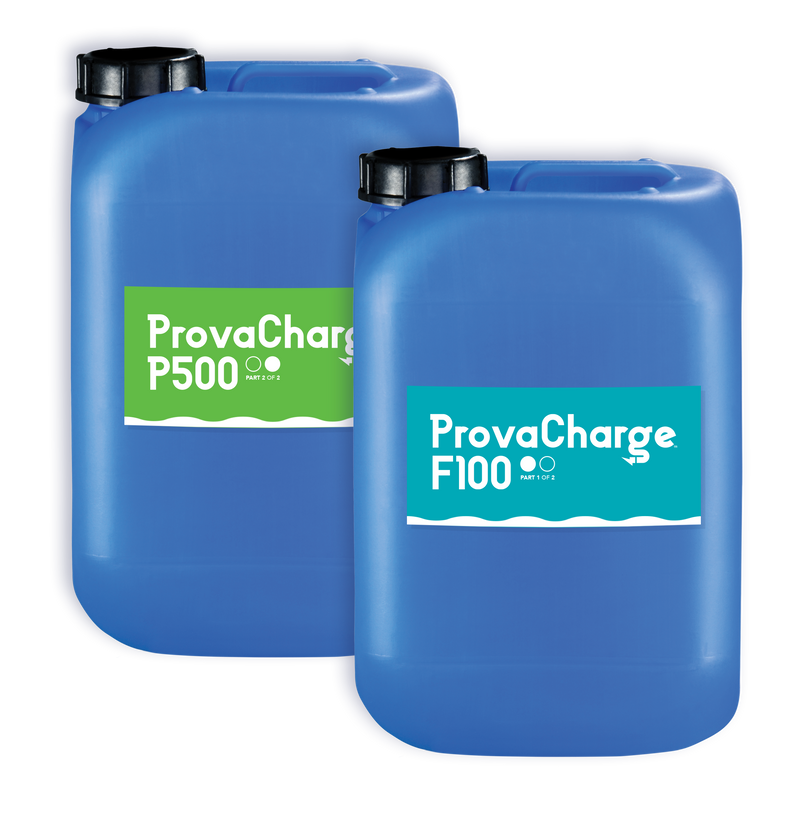
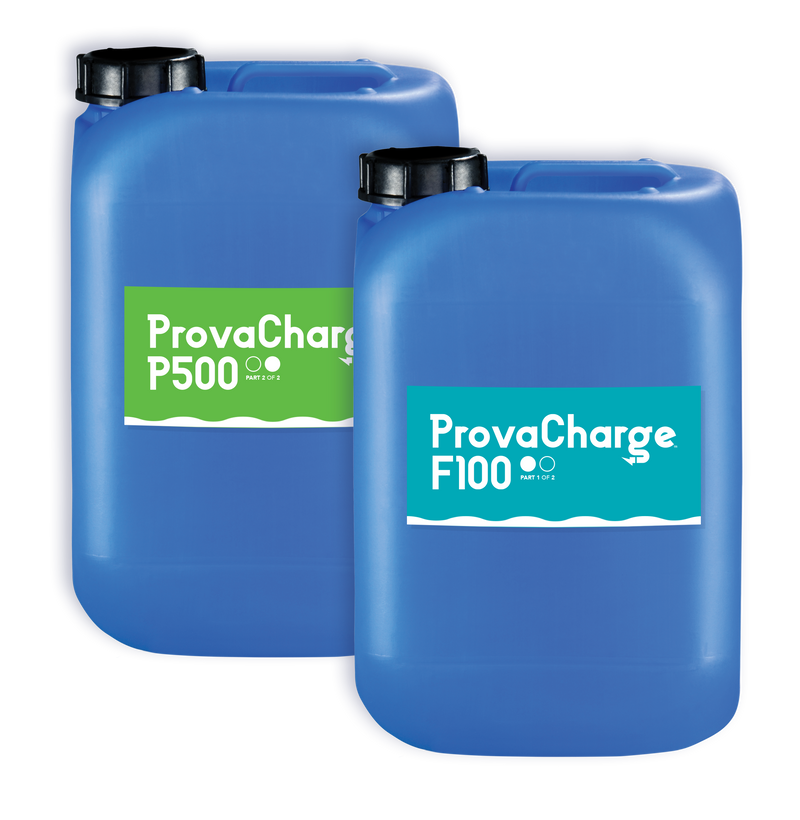
Our range includes ProvaCharge Foam, a two-part acid-based system from Sterilex. The system combines F100 Foam with P500 and is designed for biofilm and pathogen control on suitable food and non-food contact equipment and surfaces.
It is intended for use as part of an acid weekly clean, with a stated 10-minute contact time and rinse-after-use requirement.
Biofilm can present a significant challenge in food manufacturing environments.
Microorganisms can become associated with surfaces and equipment, particularly where moisture, organic residues and
difficult-to-clean areas are present.
Our disinfectant collection includes solutions specifically designed to address biofilm and microbial harbourage,
including two-part acid-based systems such as ProvaCharge.
These products can be incorporated into periodic or targeted hygiene programmes to complement routine cleaning and
environmental monitoring.
Floors can contribute to the movement of contamination throughout a food manufacturing facility, particularly around
production entrances, high-footfall areas and chilled environments.
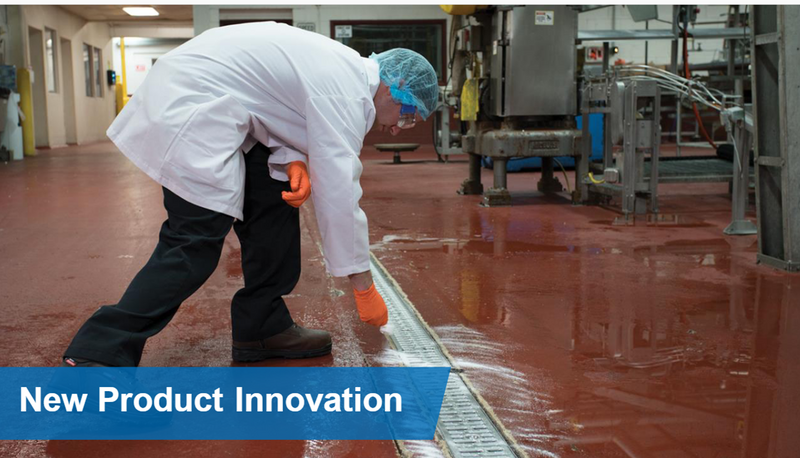
ProvaStep Dry Floor Disinfectant Granules provide a dry granular approach to floor disinfection, requiring minimal water for activation.
The blue granules are designed to be easily distinguished from food ingredients and can be applied to suitable floor areas
during production as part of an established hygiene programme.
Application options include:
ProvaStep is available in 25 kg packs and passes EN 1276 and EN 13697, according to the supplied product information.
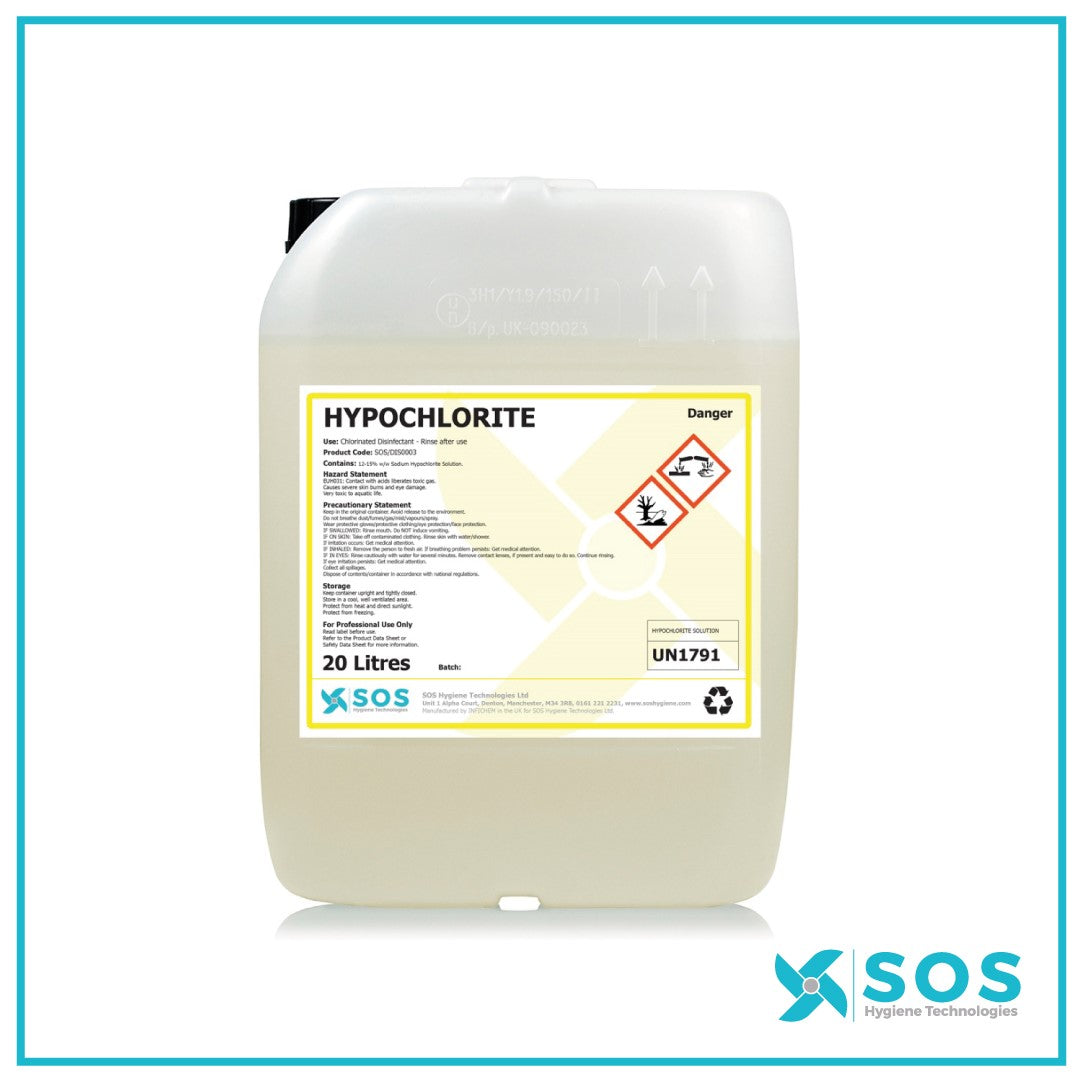
Sodium hypochlorite remains an important chemistry for many professional food industry hygiene applications.
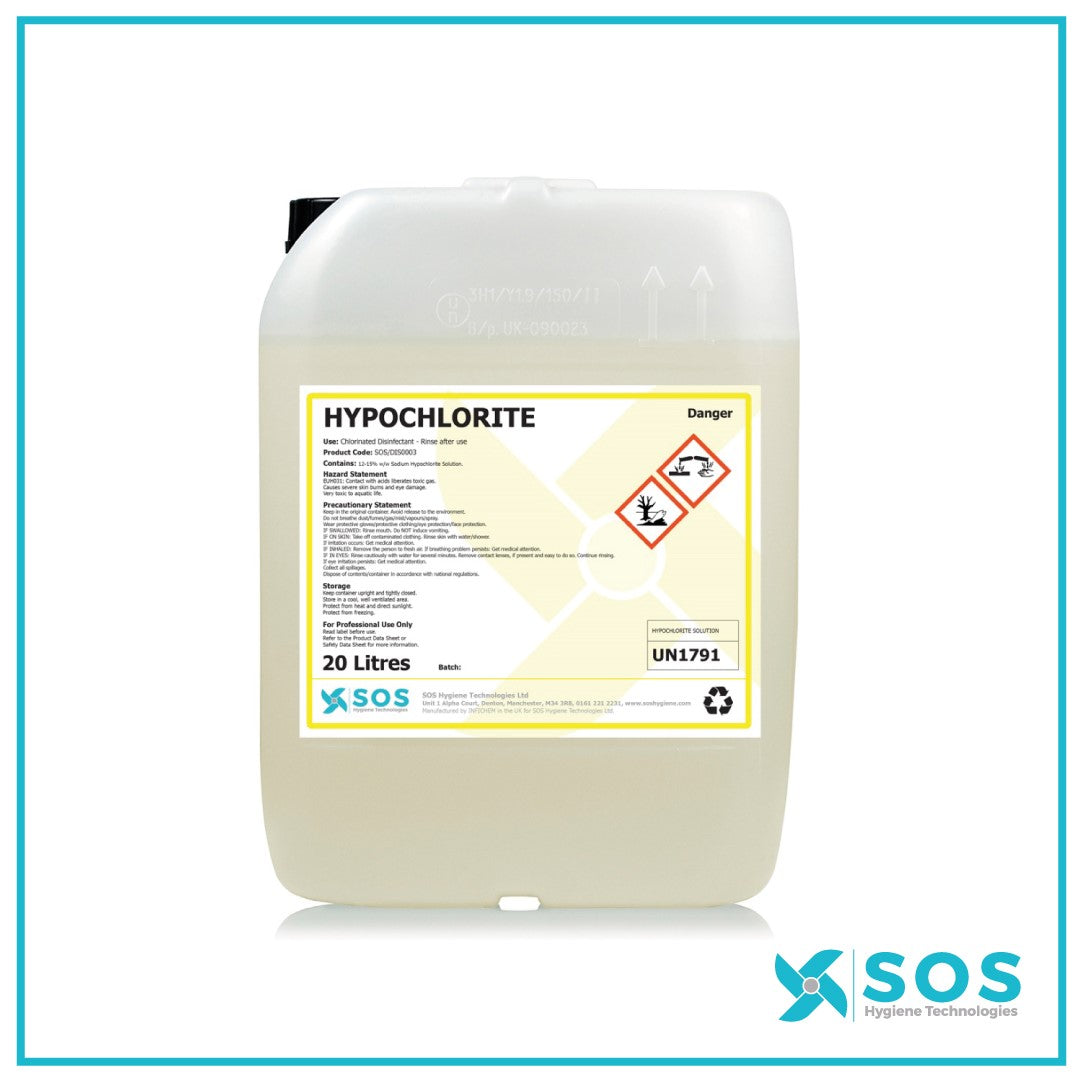
Our 14–15% Sodium Hypochlorite Disinfectantis a concentrated chlorine solution containing additional stabilising agents.
Suitable applications can include:
Rinse after use and always follow the manufacturer's instructions regarding dilution, concentration, contact time, surface compatibility and application.
Concentrated sodium hypochlorite requires appropriate chemical handling. It must not be mixed with acids or incompatible
cleaning chemicals.
For food businesses looking for alternatives to quaternary ammonium compound chemistry, our collection includes QAC-free disinfectant options.
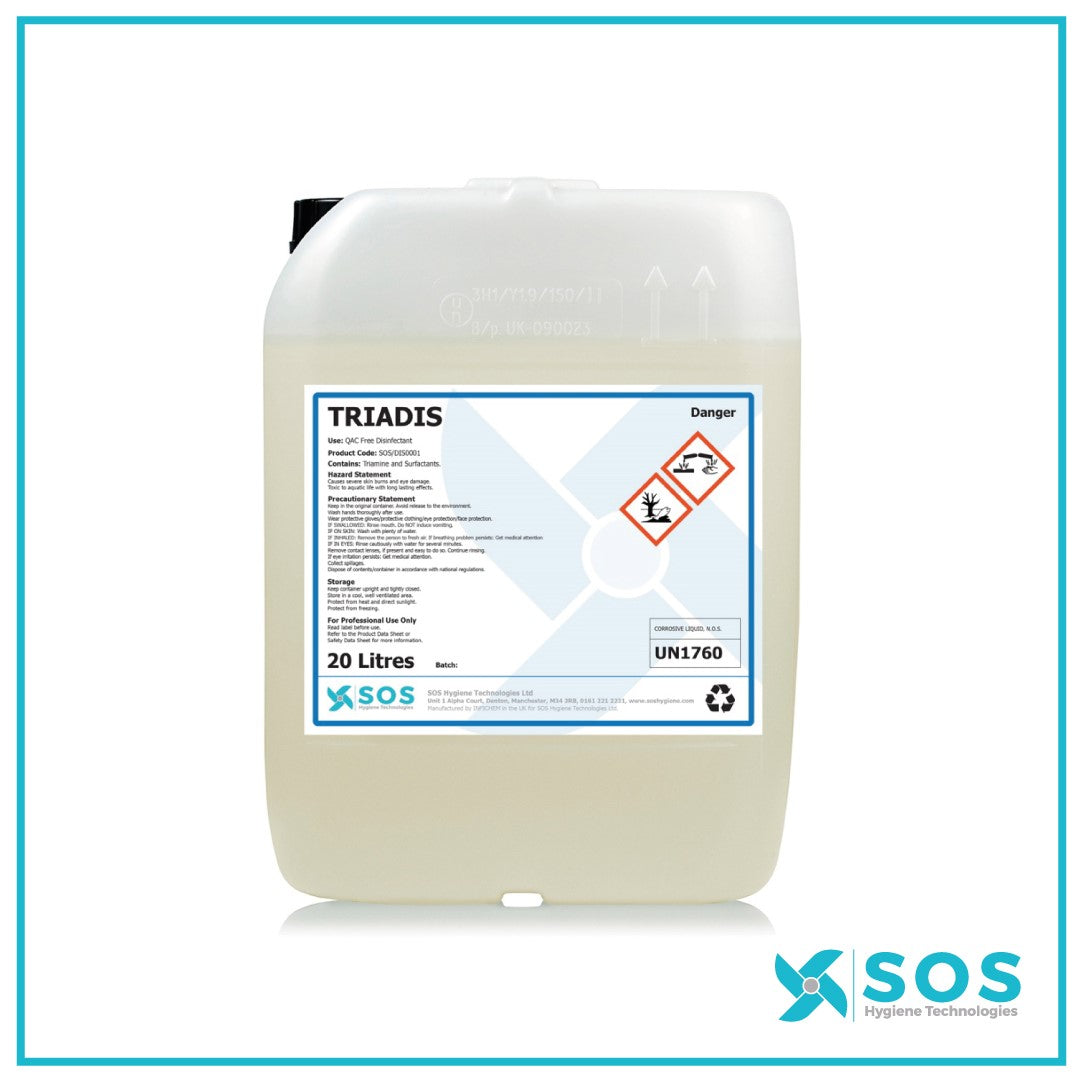
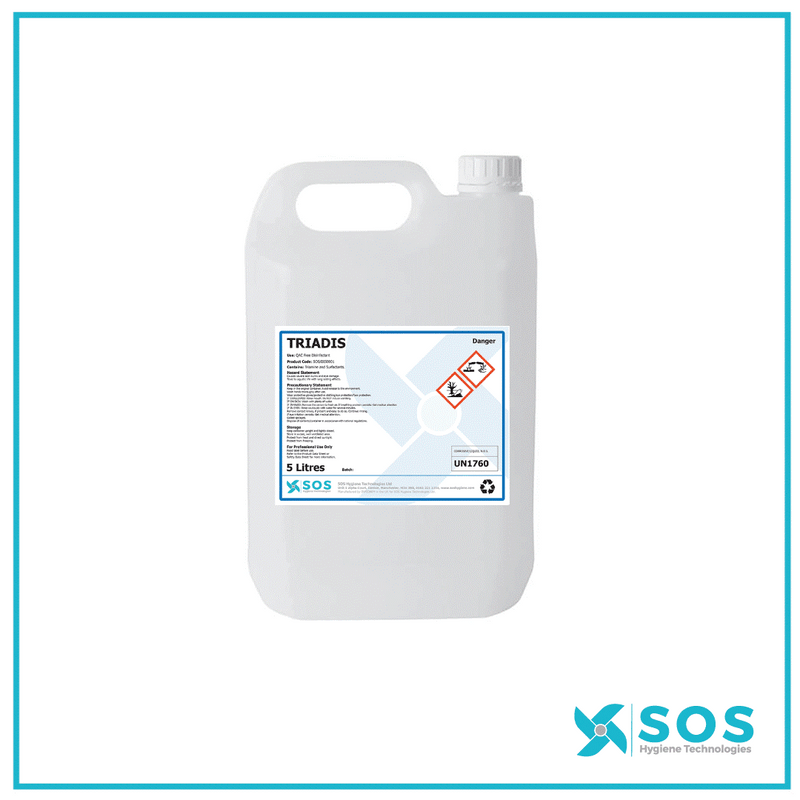
TRIADIS Disinfectant is a QAC-free formulation designed for food and beverage industry applications. It is described as a
laboratory-tested proactive formulation designed to provide broad-spectrum protection against harmful bacteria and pathogens.
TRIADIS is also designed to work at low temperatures, making it particularly relevant to chilled food processing and other cold environments.
Food and beverage production frequently involves chilled or refrigerated environments.
Meat, poultry, seafood, dairy and chilled prepared food facilities can all present hygiene challenges where cleaning and disinfection must be carried out in lower-temperature conditions.
Where low-temperature performance is required, select a disinfectant specifically suited to the intended operating conditions and always check the manufacturer's technical data for the applicable temperature range and efficacy.
Drains can represent important microbial control points within food processing environments.
Our chemical disinfectant range includes products that can be into appropriate drain hygiene and drain treatment programmes.
Foaming systems can also provide a practical application method for drainage areas. ProvaCharge Foam, for example, can be
used with suitable Dema drain foaming tools where appropriate.
Drain hygiene should form part of a wider environmental sanitation programme, particularly in wet processing areas.
Selecting the correct disinfectant depends on more than simply choosing a product with broad antimicrobial claims.
Consider:
1. Application
Is the product required for terminal disinfection, open plant cleaning, CIP, floor treatment, drains or anotherapplication?
2. Surface
Consider whether the product will be used on food contact surfaces, non-food contact surfaces, floors, equipment, pipework
or other materials.
3. Cleaning Stage
Disinfection should generally follow appropriate cleaning and removal of organic soil, as residues can affect disinfectant performance.
4. Target Organisms
Consider the microorganisms relevant to the facility's risk assessment and environmental monitoring programme.
5.Temperature
Chilled and low-temperature environments may require products specifically validated for the intended conditions.
6. Contact Time
The required contact time varies between products and applications. Always follow the manufacturer's instructions.
7. Application Method
Products may be designed for spraying, foaming, CIP circulation, granular application or another method.
8. Rinsing Requirements
Check whether the product requires rinsing after use, particularly for food contact applications.
9. Material Compatibility
Always establish compatibility with equipment, surfaces, seals, pipework and other materials before use.
Our chemical disinfectants can be considered across a broad range of food and beverage manufacturing applications, including:
Chemical disinfection is only one part of an effective food safety and sanitation programme.
A robust hygiene strategy may combine:
Cleaning – Removal of food residues, organic soil and other contamination.
Disinfection – Application of a suitable chemical disinfectant under the specified conditions.
CIP – Controlled cleaning and disinfection of appropriate closed processing systems.
Open Plant Cleaning – Foam-based or other suitable treatment of accessible equipment and surfaces.
Floor Hygiene – Management of floors, entrances and high-footfall areas.
Drain Hygiene – Targeted management of drains and other wet environmental areas.
Environmental Monitoring – Appropriate microbiological and hygiene verification procedures.
Corrective Action –Investigation and treatment of identified hygiene failures or recurring contamination.
SOS Hygiene provides a range of professional hygiene chemicals for demanding food and beverage applications.
Our disinfectant collection provides options for different hygiene requirements, including:
Whether you operate a small food preparation facility or a large-scale food manufacturing site, choosing the correct chemistry and application method is essential.
A food industry disinfectant is a chemical product designed for suitable hygiene applications within food processing, food manufacturing, food preparation or food service environments. The product should be selected according to its approved application, efficacy, surface compatibility and conditions of use.
Terminal disinfection is the application of a suitable disinfectant after cleaning to reduce microbial contamination on appropriate surfaces and equipment before the next production period.
Open Plant Cleaning, or OPC, involves cleaning and disinfecting accessible production equipment, machinery and surfaces. Foam application is commonly used where appropriate.
Some products within our range are specifically designed for biofilm control. ProvaCharge, for example, is a two-part acid-based system designed to penetrate and destroy biofilms while providing pathogen control.
Yes. Our range includes QAC-free options such as TRIADIS, designed for food and beverage industry applications.
Yes. We supply concentrated sodium hypochlorite disinfectant solutions, including a 14–15% formulation for suitable food industry, drain and CIP applications.
Yes. TRIADIS is designed to work at low temperatures, making it an option for appropriate chilled food manufacturing applications.
Some disinfectants are suitable for food contact surface applications, subject to their specific instructions and conditions of use. Always check the product documentation and follow the required rinsing procedure. Triadis is food contact safe when applied at 1% anddoes not require rinsing off.
The application determines the appropriate product. Terminal disinfectants are used on suitable accessible surfaces and equipment, while CIP disinfectants are formulated and validated for use within appropriate closed processing systems.
CIP, or Clean in Place, is a process used to clean and disinfect the internal surfaces of suitable processing equipment without dismantling the system. CIP disinfectants are circulated through equipment such as tanks, pipework and processing lines.
Peracetic acid (PAA) is apowerful oxidising disinfectant commonly used in food and beverage processing, including Clean in Place (CIP) systems. It can be used to disinfect suitable internal surfaces such as pipework, tanks and processing equipment without dismantling the plant.
PAA is particularly useful for CIP because it has broad antimicrobial activity and can remain effective at relatively low temperatures. It also breaks down into substances including acetic acid, water and oxygen, leaving relatively little persistent residue compared with some other disinfectant chemistries.
Current EU authorisations include peracetic acid products for CIP disinfection in food and beverage environments, including dairies, breweries, beverage and soft drink production and food processing.
This depends on the specific product and its authorised conditions of use. Current EU authorisations for certain PAA products used for CIP in food and beverage environments specify a final rinse with potable water following disinfection.
The CIP system should therefore be programmed according to the disinfectant manufacturer's instructions, including the required disinfection contact time, drainage and final rinse where applicable.
Food manufacturers should also verify that chemical residues have been adequately removed before production resumes, using the site's established CIP verification procedures where appropriate.
Yes. One of the advantages of peracetic acid is its ability to provide antimicrobial activity across a relatively broad temperature range, making it relevant to certain low-temperature food and beverage applications.
However, the specific temperature range and efficacy claims depend on the individual PAA product. Always check the manufacturer's technical documentation before selecting a product for low-temperature CIP.
PAA is widely used as an oxidising disinfectant and can contribute to microbial control in CIP systems. However, effective biofilm management starts with thorough cleaning and removal of organic soil before disinfection.
A CIP programme should therefore be designed around the correct sequence of cleaning, rinsing, disinfection and, where required, final rinsing. The disinfectant's specific biofilm claims should be checked against its product data and efficacy testing.
Sign up to get the latest on sales, new releases and more …